The exposure triangle is made up of three camera settings. These are aperture, ISO, and shutter speed. The relationship between these variables and their effect on image exposure is often represented visually in the exposure triangle (example pictured below).
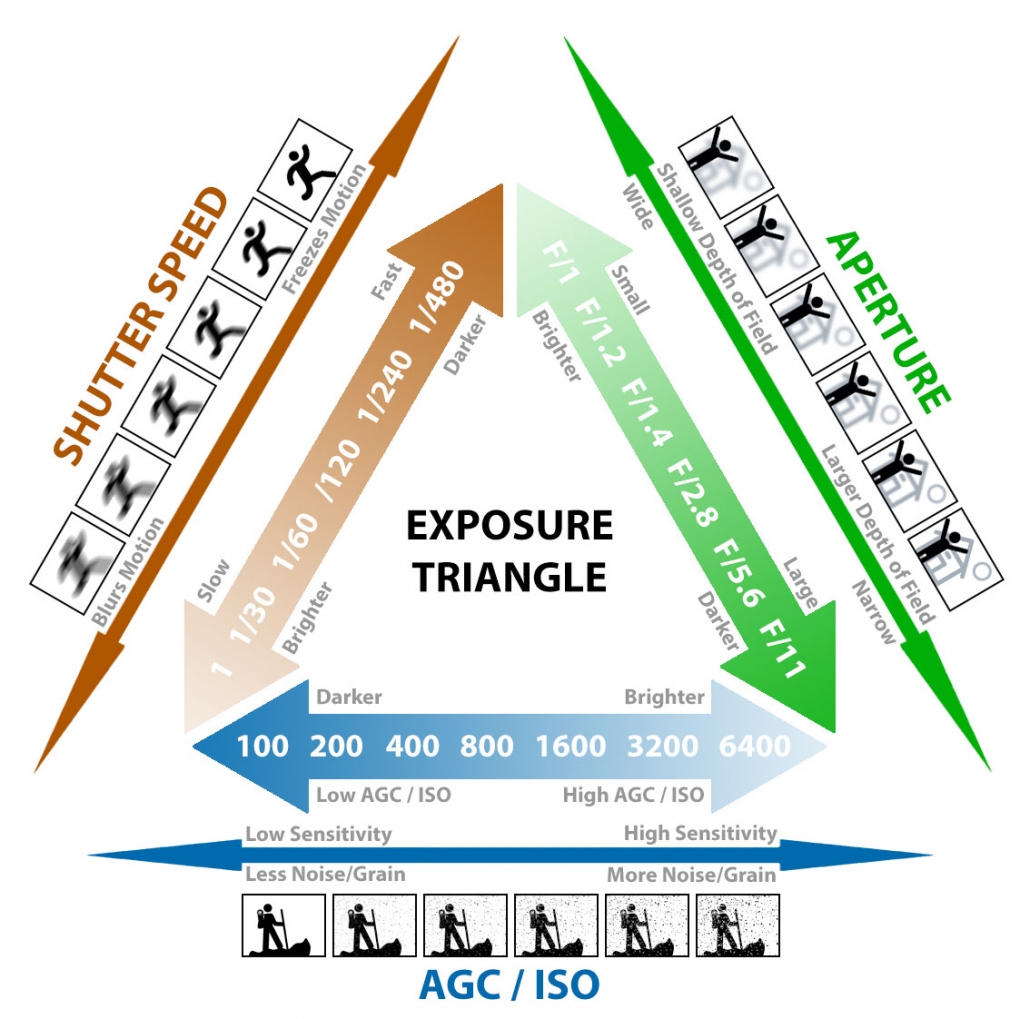
I filmed a number of short videos to demonstrate how changing each variable effects the recorded footage visually.
Aperture
Aperture is the size of the opening made by the iris to let light into the camera and through to the sensor (digital) or film (analogue). This is measured using F-stop. The lower the F-stop number the larger the aperture. This affects exposure as it controls how much light from the environment reaches the sensor. A lower aperture increases the exposure and a higher aperture lowers the exposure. Hence, footage filmed with an aperture of f/22 will appear much darker to the viewer than footage of the same subject filmed with an aperture of f/2.8 - given no other variables are changed.
Footage filmed with an aperture of f/22.
Footage filmed with an aperture of f/2.8.
The first clip with an aperture of f/22 is under exposed, while the clip with an aperture of f/2.8 is exposed much better despite both clips being shots of the same subject and filmed one after the other with no changes in lighting.
The difference between these clips also demonstrates the effect aperture has on depth of field, which is the range of items in focus in an image (Stubbs, 2021). The f/2.8 clip clearly has a much lower depth of field than the f/22 clip, shown by how the window in the foreground remains in focus while the houses in the background are out of focus, which is clearly different from the f/22 clip which shows both the foreground still i focus and the background more in focus than before. This also means the first clip filmed with a higher aperture has a high depth of field.
Film makers can therefore use the aperture function to manipulate depth of field for creative purposes, like drawing the audiences attention to a specific subject with shallow depth of field, or allowing the audience to take in a carefully constructed scene or background with wide depth of field - both of which being common creative decisions in film making.
For example, in the following sequence from M. Night Shyamalan's Old (2021), low depth of field is used to hide the children's new appearance from the audience by having them out of focus in the foreground, and focussing on the reaction of the adults which further builds up the intrigue of the audience and allows for a shocking reveal towards the end where camera switches to the perspective of their father who has just walked into the scene. Thus, as a result of Shyamalan's use of depth of field, the audience is able to empathise emotionally with the father and experience the same shock.
ISO
ISO is a camera setting that artificially increases the camera sensor's sensitivity to light, mimicking the use of extra sensitive film in analogue cameras, to increase exposure. This makes footage shot in low light conditions appear more exposed. However, increasing the ISO can have the side effect of adding noise to the picture - a result of increased gain. This effect becomes more noticeable as the ISO value increases. Here are a few examples:
The above video was shot at ISO 200 indoors with average lighting. The picture is detailed with very little noise present. (Parts of the video are not well focused as I moved away from the subject while filming, I would correct this if doing the exercise again).
The above video was shot at ISO 1600 with the same lighting conditions as the previous clip (although other settings may have been changed too as the exposure appears similar) and demonstrates the increased noise present when shooting at higher ISO values.
The first half of the following clip further demonstrates increased noise as we shot it in low light with a significantly higher ISO of 6400:
Due to the effect of increasing noise, ISO is generally the last setting a photographer or videographer changes to increase the exposure of their footage. However, it has a crucially important application in shooting in low light conditions such as concerts or when shooting night time scenes outside, where there may be little choice over how dark the environment is. Furthermore, many high-end DSLR cameras are designed to minimise the amount if noise picked up by the sensor, allowing for better quality footage to be shot in low light conditions.
Shutter Speed
In a camera, the shutter is 'the physical device that opens and closes to let light from the scene strike the image sensor' (Stubbs, 2021). Shutter speed is a camera function that changes how fast the shutter closes. A higher shutter speed results in a lower exposure as it reduces the length of time the sensor is exposed to light, conversely a lower shutter speed increases the exposure as the sensor is given more time to gather light before the shutter closes again.
Like ISO and aperture, shutter speed also has an additional effect. At slower shutter speeds the resulting video will have noticeably more motion blur because the sensor is exposed for longer and 'sees' more movement in each frame, whereas a higher shutter speed results in clearer video with less motion blur and can allow for freeze frames that show clear images.
This side affect of shutter speed has practical uses as film makers may wish to add motion blur as a stylistic choice. For example, to convey the speed of a fast moving object through motion blur. On the other hand, fast shutter speeds are very good for capturing fast action such as fighting in an action movie, animals in wildlife photography, or action in sports photography where accuracy is key. Another application of slow shutter speed is at night to capture stars, particularly star trails in long exposure photography.
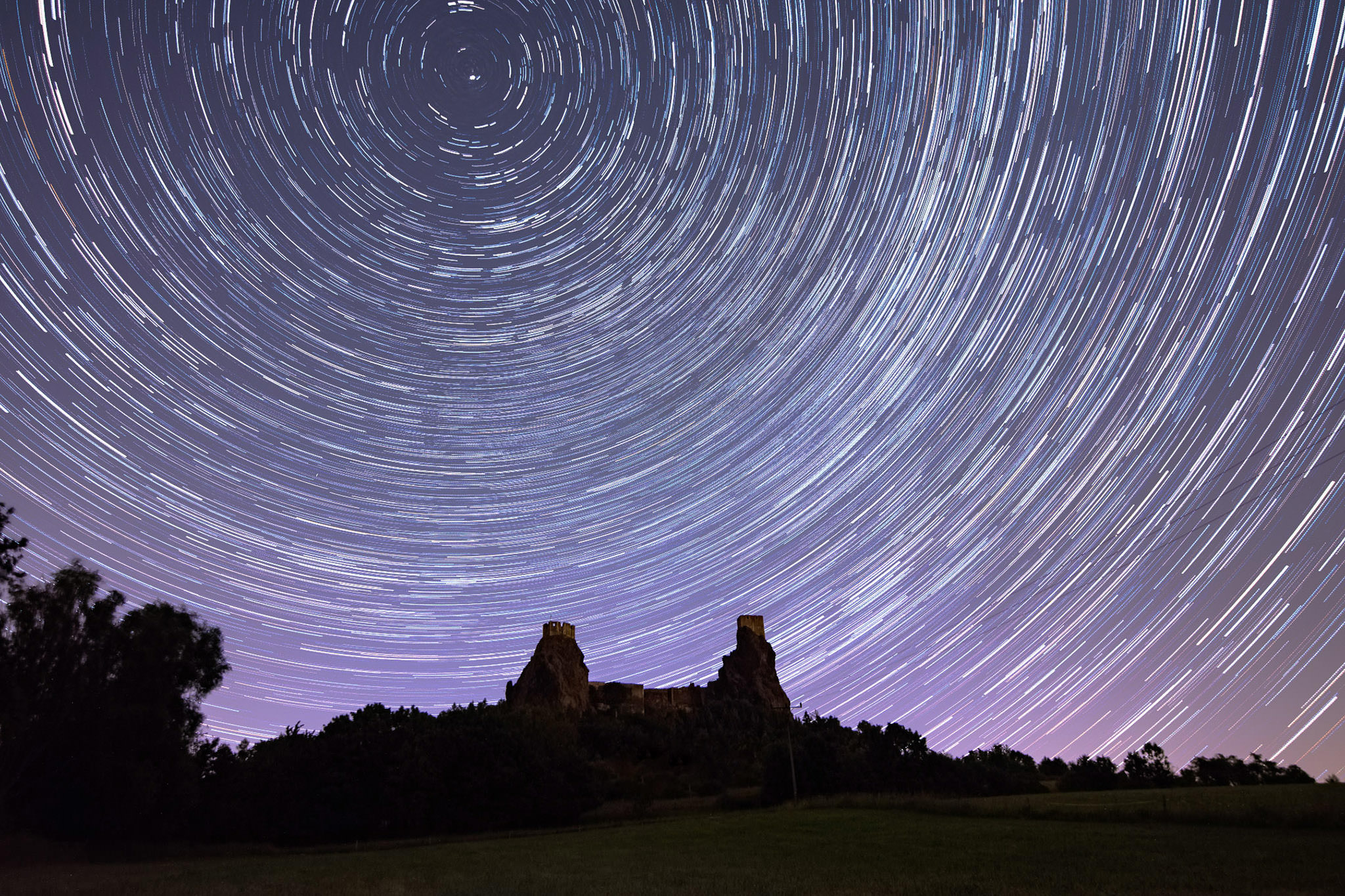
The following clips demonstrate the effects of shutter speed.
Shutter speed of 1/30
The above shows motion blur created by low shutter speed. And this is especially visible when looking at a snapshot from the video:

The moving subject is blurred while the background, which is static, remains clear.
This is noticeably different to a clip filmed with a higher shutter speed setting such as the following which was filmed with a shutter speed of 1/125:
Shutter speed of 1/125

The motion of the subject, which is the same speed as before, is now considerably less blurred and instead much more clearly defined. This is further demonstrated by the snapshot.
Bibliography:
- Stubbs, N., 2021. Digital Dictionary, A Glossary of Photographic Terms. [online] All-things-photography.com. Available at: <https://www.all-things-photography.com/digital-dictionary> [Accessed 2 December 2021].
- Old. 2021. [film] Directed by M. Shyamalan. United States: Universal Pictures.


No comments:
Post a Comment